Quick answer
- A flat mark that does not change the skin’s texture is discoloration, not a scar, and it usually fades.
- Red marks (PIE) come from small dilated blood vessels; brown marks (PIH) come from extra melanin in the skin.
- Brown marks a few shades darker than your skin usually fade within 6 to 12 months. Daily sunscreen and topical ingredients such as azelaic acid can help them fade faster.
In this post
When a pimple heals, it often leaves a flat mark behind. Some marks are pink or red, others are brown or grayish. Many people assume these are scars, but in most cases they are a color change in skin that is otherwise smooth. Dermatologists separate these marks into two main groups, and the difference affects what helps them fade.
First, is it a mark or a scar?
The American Academy of Dermatology (AAD) draws a simple line. A scar changes the texture or contour of the skin, either sunken or raised. Discoloration is flat and does not change the skin’s surface. It is not a scar, and it usually fades.
If you run a finger over the area and feel no dip or bump, you are most likely looking at a mark. Many people have both at once. A short report in the Journal of Clinical and Aesthetic Dermatology notes that patients often have a mix of red marks, brown marks and true scars, and that each needs a different approach, so it helps to identify which one bothers you most.
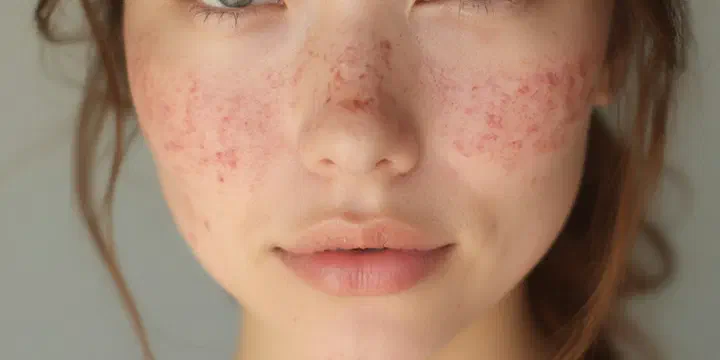
Post-inflammatory erythema (PIE): the red marks
Post-inflammatory erythema describes the pink to red discoloration left after inflammatory acne. The term was proposed in that same 2013 report, which also notes PIE can sit on normal skin or within a scar.
What causes it? DermNet links PIE to changes in the small blood vessels and thinning of the outer skin layer. A 2022 systematic review in the Journal of Cosmetic Dermatology describes post-acne erythema as redness with small dilated blood vessels that remains after the acne itself has been treated. In other words, the color comes from blood vessels.
DermNet notes that PIE is more common in lighter skin tones, while brown marks are more common in darker skin. Either can still appear on any skin tone.

Post-inflammatory hyperpigmentation (PIH): the brown marks
Post-inflammatory hyperpigmentation is a darkening of the skin after inflammation. DermNet explains that inflammation stimulates pigment cells to make more melanin and pass it to surrounding cells. When deeper layers are injured, melanin can also be deposited lower in the skin.
PIH can affect anyone, but it is more frequent, more intense and longer lasting in darker skin, according to DermNet and a review on PIH in skin of color published in the Journal of Clinical and Aesthetic Dermatology. That review identifies acne as one of the most common causes of PIH in people with darker skin.
Depth changes the color:
- Epidermal PIH, where pigment sits in the upper skin layer, looks tan to dark brown.
- Dermal PIH, where pigment sits deeper, looks blue-gray. DermNet notes it responds poorly to topical and physical treatments.
A note on terminology
You may see different labels for the same mark. The AAD uses “post-inflammatory hyperpigmentation” broadly and says that on lighter skin it is usually red or pink, while on medium or darker skin it is usually brown and can look bluish-gray. Many dermatology papers instead reserve “PIH” for pigment and use “PIE” for redness. The practical question is the same either way: is the color coming from blood vessels or from pigment?
Telling them apart
| Feature | PIE (red marks) | PIH (brown marks) |
|---|---|---|
| Typical color | Pink to red | Tan, brown or blue-gray |
| Underlying cause | Dilated small blood vessels, thinner skin | Extra melanin in the skin |
| More common in | Lighter skin tones | Medium and darker skin tones |
| Treatments with the most evidence | Vascular lasers; some topicals under study | Sun protection, topical lightening agents, peels |
If you are unsure which you have, a dermatologist can tell during an ordinary skin examination. DermNet notes that diagnosis of PIH rests on history and examination, with a biopsy only occasionally needed.
How long do they take to fade?
PIH timelines
The AAD says spots a few shades darker than your natural skin tone usually fade within 6 to 12 months. Pigment that lies deeper can take years, and may look slate blue, gray or a much darker brown. The PIH review in skin of color states that untreated epidermal PIH can last months to years, while dermal PIH may be permanent or fade only slowly. Treatment can speed fading, according to the AAD.
PIE timelines
The sources reviewed here do not give a standard timeline for red marks. The 2022 systematic review notes that some post-acne redness resolves on its own while persistent cases can be distressing. DermNet says post-acne color changes in general often fade over months or longer.
What helps brown marks fade
Treat the acne first. Both the AAD and the PIH review stress controlling the underlying acne, since every new breakout can leave a new mark.
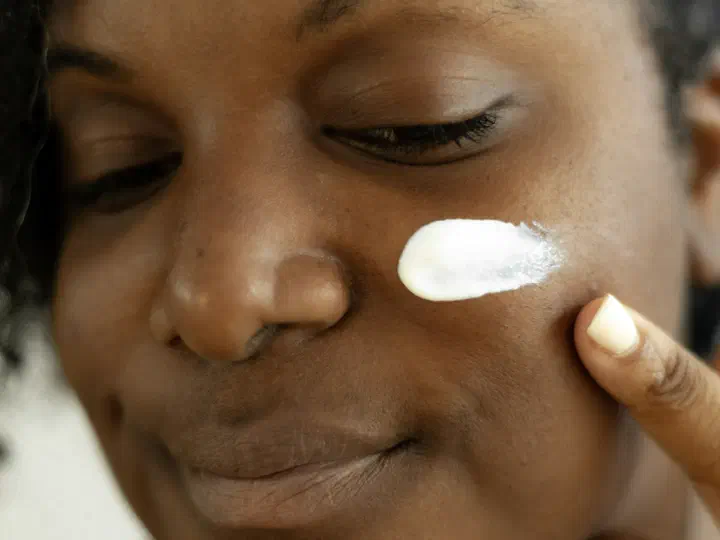
Protect from the sun daily. The AAD recommends a broad-spectrum, water-resistant sunscreen with SPF 30 or higher, and suggests a tinted formula containing iron oxide, which also protects against visible light. Choose a non-comedogenic product if your skin is oily.
Consider proven topical ingredients. The AAD lists azelaic acid, glycolic acid, kojic acid, retinoids and vitamin C as ingredients that can fade spots. DermNet lists a wider range of lightening agents, including niacinamide. DermNet adds that combinations are usually needed for significant improvement.
Ask about prescription options. The AAD notes that a dermatologist may use prescription-strength hydroquinone or laser therapy. The PIH review cautions that prolonged or high-concentration hydroquinone use can cause a condition called exogenous ochronosis, and suggests switching to a non-hydroquinone agent after prolonged use. This is one reason supervision matters.
Avoid irritation. Irritation can make PIH worse. The AAD advises against any product that burns or stings, and against imported products that may contain undisclosed steroids or mercury. DermNet warns that peels, lasers and light treatments can worsen PIH by injuring the skin, and that they do not help deeper dermal pigment.
What helps red marks fade
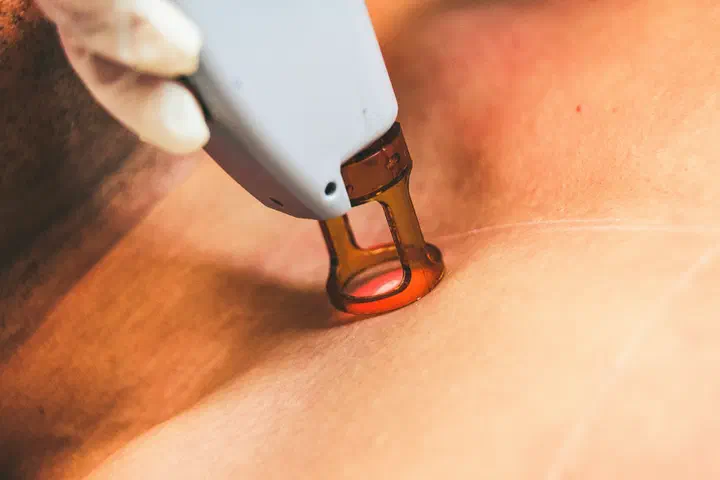
Because PIE comes from blood vessels, the research on it centers on treatments that act on vessels. The 2022 systematic review included 18 studies and found that light and laser devices were the most common treatments, with pulsed dye lasers used most often and Nd:YAG lasers second. Topical agents including oxymetazoline, tranexamic acid and brimonidine also showed promise. No serious side effects were reported, but the authors concluded that no single approach is the standard and that more randomized trials are needed.
The 2013 report describing PIE treated two patients with a pulsed dye laser and saw improvement without complications, while acknowledging these were individual cases and not a controlled study.
When to see a dermatologist
The AAD suggests seeing a dermatologist if marks do not fade with home care, since some need prescription treatment and a dermatologist can combine treatments safely. It is also worth booking a visit if you notice a change in texture, because that points to scarring, which follows a different treatment path.
Sources
- Acne scars: Signs and symptomsAmerican Academy of Dermatology
- How to fade dark spots in darker skin tonesAmerican Academy of Dermatology
- Postinflammatory hyperpigmentationDermNet
- Acne scarringDermNet
- Postinflammatory Hyperpigmentation: A Review of the Epidemiology, Clinical Features, and Treatment Options in Skin of ColorJournal of Clinical and Aesthetic Dermatology (PMC)
- Easy as PIE (Postinflammatory Erythema)Journal of Clinical and Aesthetic Dermatology (PMC)
- Post-acne erythema treatment: A systematic review of the literatureJournal of Cosmetic Dermatology (Europe PMC)
Filed under acne marks